

New findings from the most comprehensive review of economic growth and impact to date involving Tribal Nations in Michigan showed non-gaming business activities have grown rapidly, bringing prosperity to communities throughout the state and greater economic sovereignty to indigenous peoples.
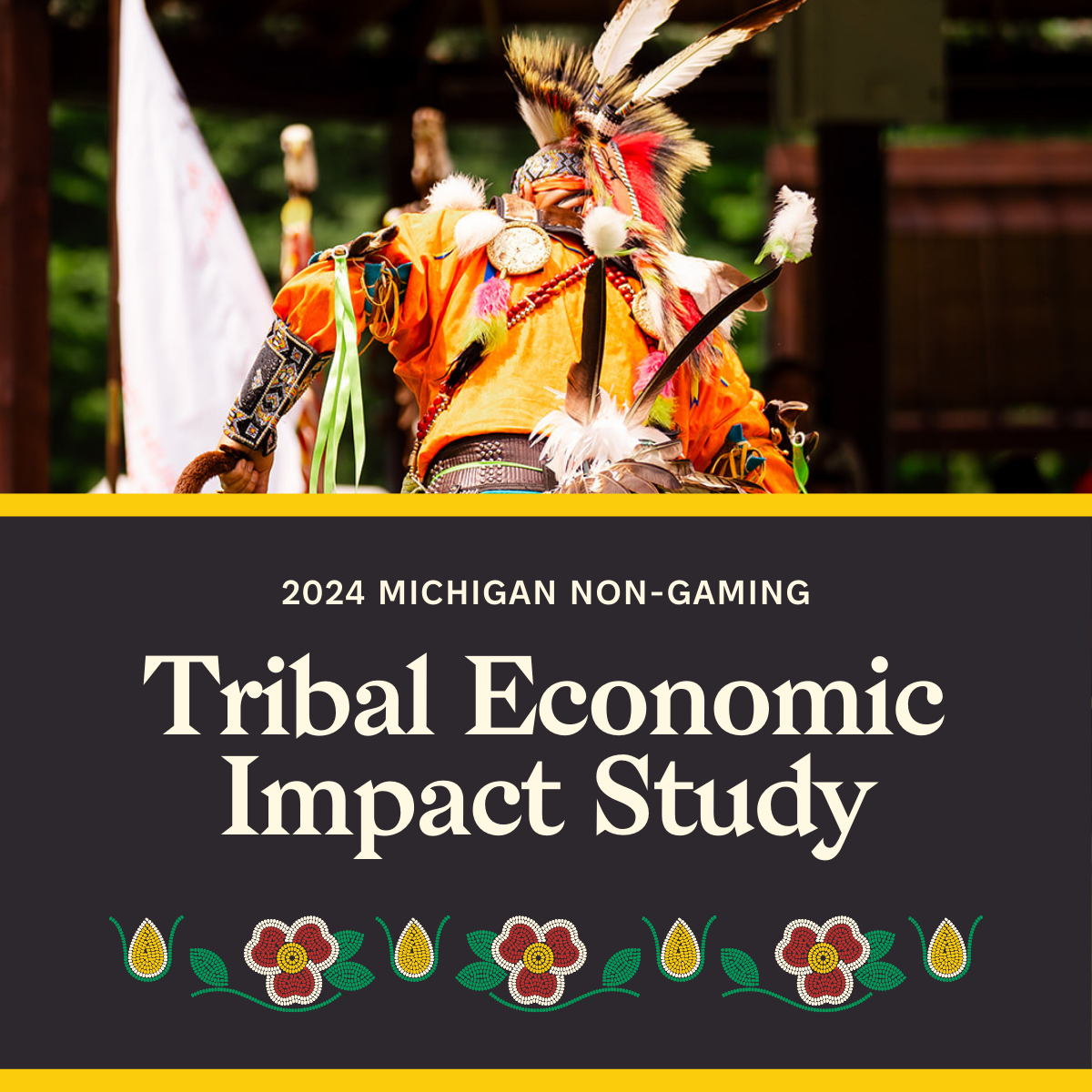
The 2024 Michigan Non-Gaming Tribal Economic Impact Study, a collaborative report on the state of Tribal Business Entities (TBEs), was published online today and shared with the Office of Michigan Governor Gretchen Whitmer. The findings were produced by aLocal.ai, a Native-owned business that conducts economic impact analysis. The study found that a total of 78 TBEs are now in operation by the 12 federally recognized Tribes in Michigan. They generated a total economic impact of $1.24 billion last year. That total includes direct, indirect, and induced economic effects of Tribal businesses.
“The economic power of Tribal businesses is growing exponentially each year and delivering great benefits to Tribal communities and the entire state. Economic diversity provides a path to future sustainability, sovereignty, and self-governance for Tribes that engage in non-gaming business development. Proof of that is clear to see in this report.”
A closer look at the data shows the TBEs, on average, have been in operation for 15.3 years, with an average revenue of $10.32 million per entity. Additionally, Michigan Tribes collectively employed 2,819 workers (direct), with an average wage for those employees of $59,971.
“It is incredible when all twelve Native nations participate in such an important research effort to help exercise their economic Sovereignty,” said Eric Trevan, Ph.D., lead researcher and CEO of aLocal.ai. “We are honored to once again lead this research effort and help show the positive impact on Native economies and well as other economies throughout Michigan.”

The report showed that TBEs had total business assets of nearly $1.5 billion and total annual gross revenues of $805 million. Furthermore, those businesses paid nearly $136 million in taxes to the federal and state governments in 2024 alone.
“The economic impact highlighted in this study is both significant and encouraging,” said Tom Durkee, Director of Tribal Business Development at the Michigan Economic Development Corporation, which funded the study. “As we look to the future, Tribal business development remains a vital component of our Make It in Michigan economic development strategy. By leveraging unique cultural assets and pursuing strategic economic opportunities, Tribal Nations are well-positioned to diversify their economies, generate sustainable revenue beyond gaming, and create quality jobs that strengthen communities across Michigan.”
Economic independence is essential to the health and well-being of Native Americans. U.S. Census Bureau data published in 2021, and shared in a report by the nonprofit agency Child Trends, showed that poverty rates for American Indian and Alaska Native (AIAN) populations was 12.4%, which is significantly higher than those for other ethnic populations. Also, the estimated percentage of AIAN children living in poverty in 2021 was 7.4%, more than twice the rate (2.7%) for White non-Hispanic children.
“Guided by the principle of Seven Generation Thinking, we are called to make choices that protect our culture, our people, and our future. This report shows how non-gaming economic development is helping us do that. While Tribal sovereignty is supported by many pillars, expanding economic opportunity is a critical one. By investing beyond gaming, our communities are building greater economic independence and strengthening the foundation for long-term self-governance and self-determination.”